Compete at AIgnite 2k26
Build Smart. Win Big.
 ₹1,00,000 |
  ₹50,000 |
  ₹25,000
₹1,00,000 | ₹50,000 | ₹25,000
AIgnite 2k26 inspires high-quality, innovative ideas/solutions to real-world problems by uniting multidisciplinary talent from any discipline to collaborate, ideate, and engineer impactful technologies in Robotics, Artificial Intelligence, and Geospatial domains.
This event fosters skills for future tech leaders through team-based challenges in intelligent automation, offering hands-on experience with cutting-edge tools and real-world applications.

AIgnite 2k26 features a two-round structure to guide participants from ideation to prototyping, building skills in intelligent automation across Robotics, AI, and Geospatial tracks.
Open to students from any discipline Multidisciplinary teams encouraged
Team size: 3 to 5 members
Registrations Open: 20 December 2025
Registration Closes: 10 January 2026
Round 1 - Ideation Submission
Date: 24 January 2026
Mode: Online
Teams submit innovative ideas and early concepts addressing real-world problem statements.
Round 2 - Finals
Date: February 2026
Mode: In-person / Hybrid
Shortlisted teams develop and demonstrate functional prototypes before a jury.
Detailed formats for Ideation (Round 1) and Prototyping (Round 2) will be shared with registered teams via email.

Win prizes up to ₹1,00,000 by participating in AIgnite 2k26.

Enabling internship opportunities for top talents.

Certificates will be awarded to all the participants.
The challenges section highlights three core tracks for AIgnite 2k26, merging categories and focus areas to drive targeted innovation in intelligent automation.
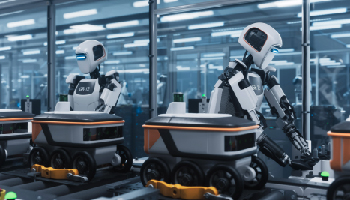

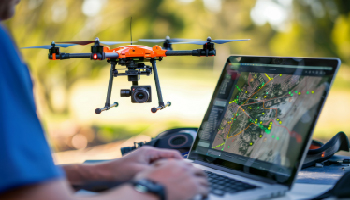
Robo-1: Autonomous Material Transport Robot Statement: Construction sites face delays due to inefficient material movement. Challenge: Design a robot that autonomously navigates a dynamic construction site to transport construction materials (e.g., blocks, rebars, aggregates) from storage to work zones, avoiding obstacles and adapting to terrain changes. Simulate your design and check for productivity gain for a any specific material transport task.
Robo-2: Rebar Tying Robot Statement: Rebar tying in reinforced concrete construction is labour-intensive, repetitive, and poses ergonomic risks to workers. Ensuring consistent tie quality and placement accuracy is critical for structural integrity and compliance with engineering specifications. Challenge: Design and simulate a robot that autonomously performs rebar tying tasks on construction sites. The robot must navigate complex, environments, identify rebar intersections, and execute precise tying operations while adapting to varying layouts and tie patterns. Your challenge is to develop a robotic system capable of real-time rebar detection, positioning, and secure tying, ensuring speed, consistency, and safety in dynamic construction settings.
Robo-3: Autonomous Scaffold Construction Robot Statement: Scaffold assembly on construction sites is physically demanding, time-consuming, and poses significant safety risks due to working at heights and manual handling of heavy components. Precision in scaffold placement is essential to ensure structural stability and worker safety. Challenge: Design and validate a robot that autonomously constructs scaffolding structures in industrial and construction environments. The robot must interpret scaffold layout plans, identify anchor points, and assemble modular components with high precision. Your challenge is to conceptualize, design and validate (via simulations) a robotic system capable of, handling scaffold elements, and executing safe, efficient assembly operations while adapting to sitespecific constraints and evolving construction progress.
Robo-4: Rebar Cage Assembly Automation Statement: Rebar cage assembly in reinforced concrete construction is labor-intensive, errorprone, and hazardous, requiring precise placement and tying of heavy steel bars in complex configurations, and time consuming. Challenge: Design and simulate an autonomous robotic system/s that can assemble rebar cages with precision and safety in dynamic construction environments. The robot/robots should be capable of handling, positioning, and tying rebar of varying sizes and configurations. It must operate reliably in cluttered, semi-structured spaces with minimal human intervention and significantly save time. Real-time verification of cage geometry and tie integrity against design specifications is essential. The system should also ensure safety compliance and integrate with digital construction workflows for progress tracking and quality assurance.
AIRC-1: Collaborative Structural Assembly by Multiple Robots Statement: Assembling large structural components requires synchronized efforts, which are difficult to manage manually. Challenge: Plan and validate a multi-agent robotic system capable of collaboratively lifting, positioning, and fastening structural components during bridge construction. The system should include multiple autonomous robots—such as mobile manipulators, aerial drones, and gantry systems—that work in sync to handle large and heavy elements like girders, beams, and deck panels. Each agent must plan and execute tasks with spatial awareness, communicate in real-time to avoid collisions, and adapt to dynamic site conditions such as wind, terrain, and human activity. The system should ensure millimeter-level precision in alignment, robust fastening, and compliance with structural safety standards.
AIRC-2: Multi-agent Co-ordinated Task Planning in Construction Statement: Construction sites involve complex, dynamic environments where multiple robotic agents must perform interdependent tasks. Lack of coordination leads to inefficiencies, collisions, and delays, especially in time-critical operations like material handling, assembly, and inspection. Challenge: Use at least 5 robotic agents to plan a multi-agent robotic system capable of coordinated task planning and execution in construction settings. Each agent should autonomously navigate, communicate, and collaborate to complete tasks such as material transport, structural assembly, and site inspection. The system must handle dynamic changes, avoid conflicts, and optimize task sequencing while ensuring safety and efficiency across the site.
AIRC-3: Multi-Agent Planning for Excavation and Hauling Operations Statement: Excavation tasks often involve multiple machines working in proximity, risking collisions and inefficiencies. Challenge: Create and simulate a multi-agent robotic planning system that enables excavators and haulers to work collaboratively and efficiently in dynamic construction environments. The system should allow autonomous agents to allocate excavation and transport tasks based on real-time site conditions, material volumes, and machine availability. It must ensure synchronized movements to prevent collisions, bottlenecks, and idle time, while optimizing throughput and fuel efficiency.
AI-1: VLM enabled industrial and complex infrastructure inspection Statement: Industrial inspections are critical for safety and efficiency, but manual methods are slow, error-prone, and resource-intensive. Challenge: Create and simulate a robotic inspection system powered by Vision-Language Models (VLMs) that can autonomously analyze visual data from industrial environments such as refineries, power stations, or chemical plants. The system should interpret real-time camera feeds, detect anomalies (e.g., corrosion, leakage, misalignment), and generate detailed inspection reports in natural language. Participants must focus on:
AI-2: Safety Surveillance Vision Model Statement: Ensuring compliance with Personal Protective Equipment (PPE) protocols on construction and industrial sites is critical for worker safety and regulatory adherence. Manual monitoring is error-prone, resource-intensive, and often reactive rather than proactive. Challenge: Train and test an AI-powered vision model that autonomously monitors PPE compliance in real-time across dynamic work environments. The system must detect and classify PPE elements—such as helmets, gloves, safety vests, goggles, boots, full body harness for height work—on personnel using live video feeds or recorded footage. Your challenge is to develop a robust, scalable vision model capable of operating in varied lighting, occlusion, and motion conditions, and generating actionable alerts or compliance reports to enhance site safety and accountability.
AI-3: Generative Design (Text-to-Design)
Statement: Develop a generative AI system where an engineer can type a natural language prompt such as “Generate a piping layout for a desalination plant with X capacity”, and the model outputs a BIM-compatible schematic or AutoCAD draft.
Challenge: Converting unstructured text input into structured engineering designs.
Handling domain-specific engineering constraints (flow rates, safety standards, material compatibility).
Ensuring outputs are interoperable with existing EPC tools (BIM, AutoCAD, Revit).
Balancing creativity vs. compliance with engineering codes/standards.
AI-4: Smart Electrical SLD Intelligence — Source & Feeder Extraction
Statement: Develop an AI-powered system capable of interpreting Single Line Diagrams (SLDs) of electrical substations to automatically identify and extract information about sources, destinations, and feeders. The system should transform static SLD images or CAD schematics into structured, digital representations that can be integrated with GIS, asset management, or SCADA platforms.
Challenge: Applying computer vision and NLP techniques to interpret electrical symbols, labels, and line connections in SLDs.
Accurately identifying source sections (e.g., transformers or incoming supplies) and destination sections (e.g., outgoing feeders or load centers).
Extracting feeder-level attributes like feeder IDs, ratings, and interconnections.
Standardizing and exporting the extracted data for downstream digital engineering applications.
AI-5: Formula Intelligence — Zero-Based Costing Model Linkage Extraction
Statement: Develop an intelligent system to analyze Zero-Based Costing (ZBC) Excel models and automatically extract, map, and visualize formula linkages across multiple sheets. The system should provide full visibility into cost driver relationships, dependencies, and formula hierarchies to enhance auditability, transparency, and decision-making in financial models.
Challenge: Parsing and interpreting complex, nested Excel formulas across multiple interconnected sheets.
Mapping dependencies between raw material costs, operations, and outcome cells.
Visualizing formula networks to represent cost driver linkages and cascading impacts.
Enabling automated auditing, model validation, and “what-if” analysis through dependency graph gene
AI-6: Domain-Specific LLM Fine-Tuning (EPC Reasoning Focus)
Statement: Fine-tune a Large Language Model (LLM) on EPC-specific documents covering engineering, construction, project execution, project management, supply chain management, and procurement. The LLM should act as an EPC reasoning engine that can answer complex domain queries, assist in decision-making, and summarize key insights from relevant large public document sets.
Challenge: Preparing and cleaning highly technical EPC document datasets.
Capturing domain reasoning and contextual dependencies (e.g., link between procurement delays and project execution risks).
Ensuring accuracy, compliance, and factual correctness in AI outputs.
Designing a system that can support multi-stakeholder queries (engineers, project managers, procurement teams).
AI-7: AI-Based Data Extraction from Geotechnical UCS Graphs
Statement: Develop an AI-driven system that can automatically extract quantitative data from Unconfined Compression Strength (UCS) test graphs present in geotechnical investigation reports (typically in PDF or image formats). The system should identify and extract depth-wise UCS values and convert image-based or scanned data into structured, machine-readable formats (CSV, Excel, or database entries) suitable for engineering modeling and analysis.
Challenge: Detecting and digitizing graphical data (plots, curves, and axes) from scanned or PDFbased UCS charts.
Extracting and mapping key parameters such as depth of sampling and UCS values for each bore hole.
Handling variations in graph formats, resolutions, and scales across different report templates.
Converting extracted data into standardized, structured datasets for geotechnical modeling tools.
GS-1: Automated Progress Monitoring using Drone Photogrammetry
Statement: Construction teams often rely on manual reports and site logs to measure physical progress. These methods are time-consuming and subjective. The challenge is to develop an automated solution that quantifies progress by comparing sequential drone photogrammetry datasets with planned schedules.
Input:
Drone-captured orthophotos and DEMs (Digital Elevation Models) from multiple time intervals
Ground control points (GCPs) and project baseline schedule (in Excel or Primavera format)
Expected Output:
Automated calculation of volume changes, excavation and filling quantities
Generation of a color-coded 2D or 3D progress map
Percentage progress report that correlates with baseline schedule activities
Optional integration workflow with Power BI or Primavera for visualization
GS-2: Point Cloud-based As-Built Validation and Deviation Detection
Statement: Ensuring that executed work matches design specifications is critical but often delayed due to manual inspection. The challenge is to develop a method that automatically detects and quantifies deviations between the as-built point cloud and the as-designed model.
Input:
High-resolution 3D point cloud (LAS/LAZ format) of an under-construction structure (e.g., retaining wall, pier, or building or towers)
Corresponding BIM model or 2D design drawings (DWG/Revit format)
Expected Output:
Alignment and registration of point cloud with the design model
Detection and visualization of deviations beyond tolerance thresholds
Automated deviation reports (e.g., tabular or heatmap formats) showing overbuilds or underbuilds
Insights that can aid quality checks and approval workflows










Registrations Open

Registration Closes

Round 1

Final